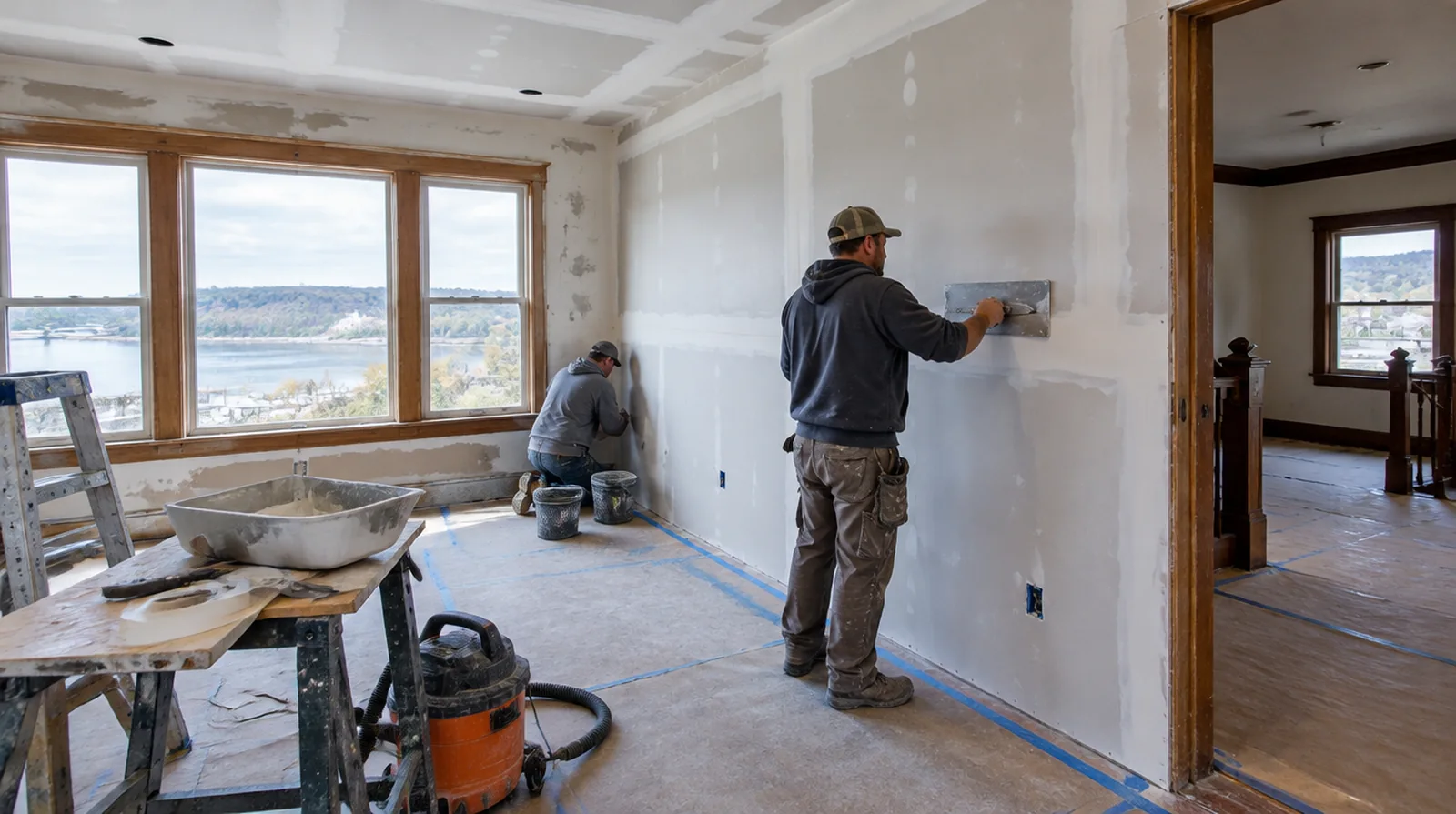
Judge from normal positions
Assess the dried texture from everyday viewpoints rather than judging only a close view of a wet sample. The planned decorative paint sheen and oblique light both belong in the final appearance discussion. For walls beside bright windows, review a dry sample from an oblique angle as well as looking straight at the repaired surface.
Consider hand applied surfaces
Troweled textures need attention to tool direction, pressure and spacing between repeated shapes. A representative trial is useful when there is no standard machine setting that reproduces the current finish. If the coating stability is unclear, assess which layers are adequately bonded and which should be removed instead of simply hidden beneath new material.
Prepare a sample area
Use a limited trial to compare the scale, distribution and flattening of the proposed finish. Approve the sample before extending the treatment across the entire repaired area. When the decorative coating has been selected, tell the finisher its intended sheen and color while the substrate preparation standard is still being agreed.
Study the paint layers
Older paint coats may have filled or rounded the original texture profile. A fresh application could need adjustment to resemble the current surface rather than the original texture recipe. If occupancy must resume on a certain day, include the later primer and paint stages in the timetable as well as drywall installation and finishing.
Set realistic blend expectations
Age, paint buildup and irregular original application can limit how closely a patch can blend. A wider wall treatment may be worth discussing if a localized repair remains conspicuous. Where several contractors share the renovation, identify the inspection and handover milestones that determine when each following stage can proceed.
Control application conditions
Compound consistency and application distance affect how a sprayed pattern lands on the wall. Room conditions and drying rate also influence when a knockdown pass should be made. For a project involving a building manager, confirm access hours and protection requirements before promising a start date or a short completion window.
Use appropriate primer
A new texture and the painted wall around it can take up paint unevenly. A suitable primer helps the paint system perform consistently without changing the texture profile unnecessarily. When panel replacement exposes a cavity, resolve any required inspection before that opening is closed and the finishing work begins.
Blend beyond the patch
An abrupt rectangular texture boundary often draws attention even when the pattern itself is close. Gradually extending the texture into the surrounding surface may make the blend less abrupt. If occupancy must resume on a certain day, include the later primer and paint stages in the timetable as well as drywall installation and finishing.
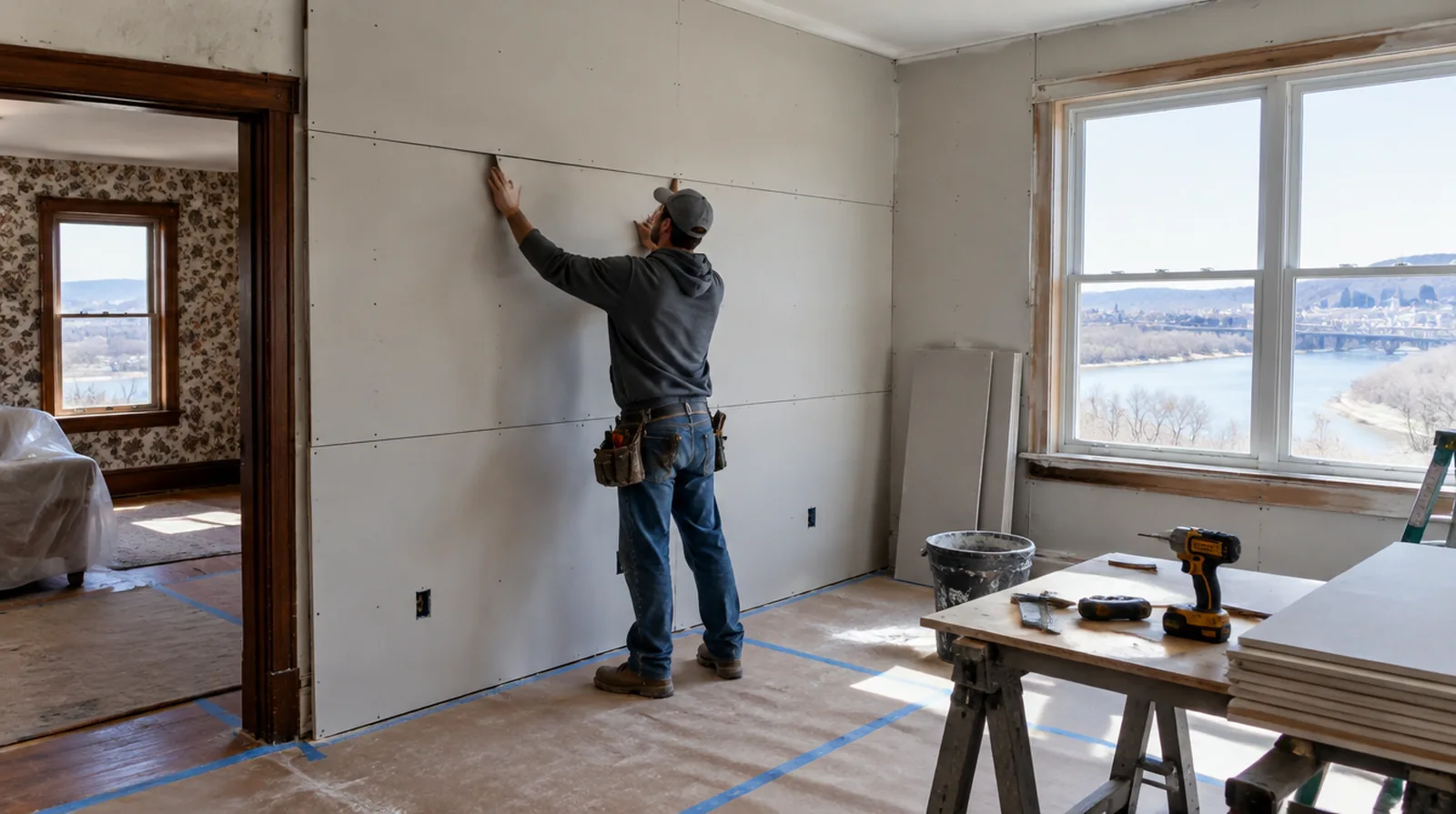
Check the underlying repair
A decorative pattern will not reliably disguise a ridge or an uneven board joint underneath it. Complete a stable level repair before trying to reproduce the surrounding texture. If the original finish is unusual, keep a small reference sample or a close photograph to support the discussion about blending and restoration.
Allow time before painting
Let a new texture become ready for decoration rather than applying paint onto soft material. The quote should explain whether the next decorating stage is included or left to a painter. At a repair beside an opening, allow clearance for moving board through the doorway and space to use the finishing tools effectively.
Project context in Sioux City
Sioux City's cold winters and hot summers make cracks above doors open and close with the seasons. Spring thaw seepage can stain finished basement walls, so water entry should be addressed first.
Scope questions before finishing
When panel replacement exposes a cavity, resolve any required inspection before that opening is closed and the finishing work begins.
When the same defect has returned, share information about previous repair methods so the next assessment can consider why they did not last.
When building management controls access, agree delivery hours and common area protection before committing to a start or finish date.
If a room has only limited ventilation, discuss how the finishing materials can dry without disrupting comfort or spreading dust elsewhere.
For a surface carrying numerous paint layers, discuss whether differences in the retained profile or sheen justify decorating a broader area.
If the wall surface work belongs to a broader renovation, coordinate its order with flooring, cabinetry and trim instead of scheduling finishing in isolation.
When comparing competing estimates, make sure their protection, surface finish and disposal allowances describe equivalent work before comparing the final prices.
For an initial assessment from pictures, provide an overall room photograph and a detailed view of the defect so both context and scale are apparent.
Where the wall surface meets fixed furniture, clarify whether removal is included or whether the finish will terminate at the accessible edge.
Where a surface has been painted many times, consider whether differences in texture or sheen will require a wider decorative treatment.
For a tightly furnished room, plan temporary storage and the minimum working clearance before material is carried into the property.
If the completion date matters most, allow for intervals between coats as well as active labor rather than assuming the entire process happens continuously.
Explore the Sioux City drywall overview for related options, or read the project planning information before arranging the next stage.
More planning details for Sioux City
Dakota Dunes and newer east side homes often have smooth walls that show patch edges clearly. Older homes in Rose Hill often have plaster walls that need careful blending with new board. A crack that keeps returning in a Sioux City home usually needs to be taped rather than filled again.