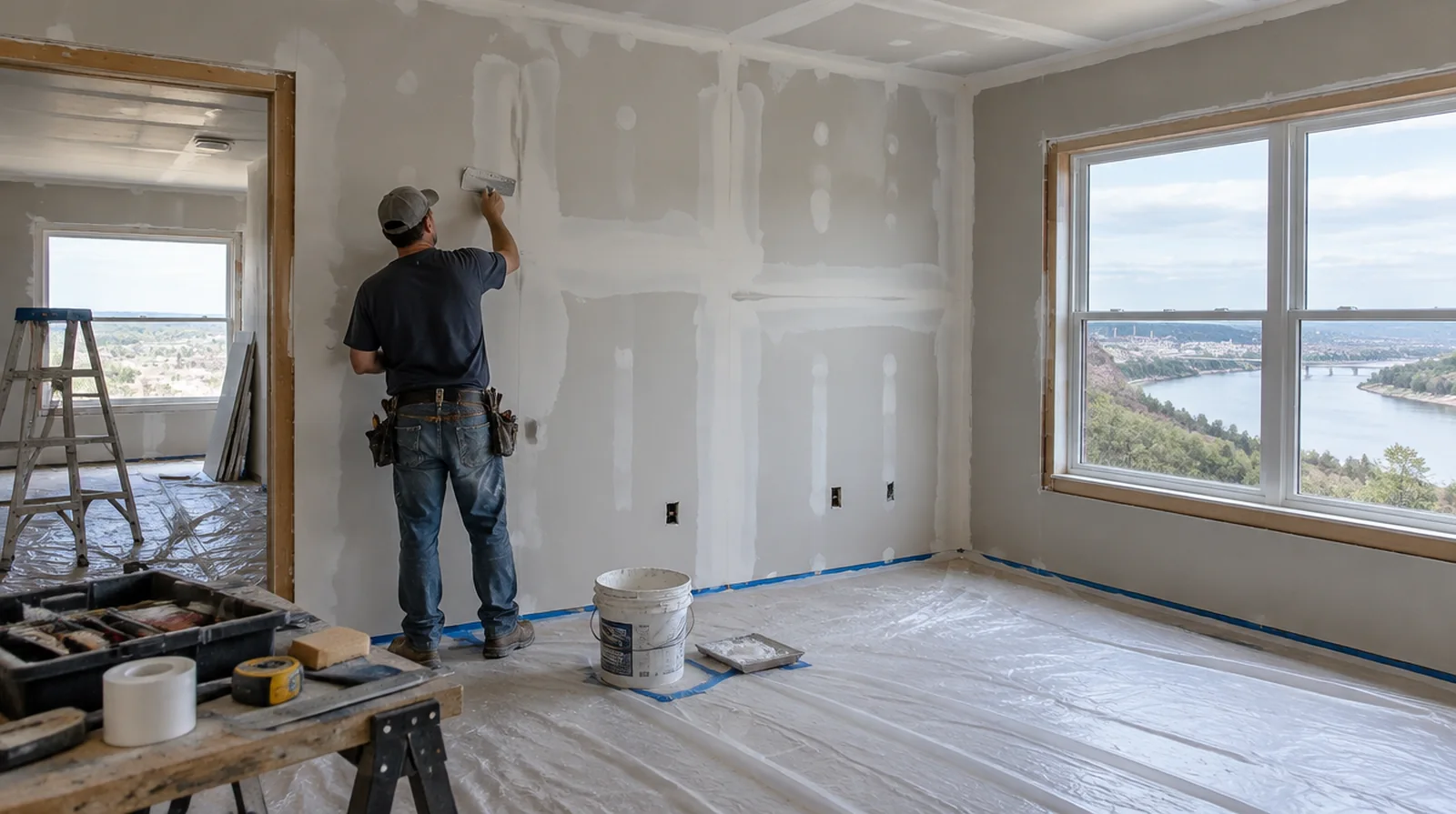
Document recurring movement
A crack that repeatedly reappears might need the cause investigated before more cosmetic work. A drywall estimate should state when another trade needs to investigate before surface work proceeds. For an initial assessment from pictures, provide an overall room photograph and a detailed view of the defect so both context and scale are apparent.
Reinforce panel seams
The connection between old board and a patch needs reinforcing joint treatment. The tape belongs in a compatible bedding coat without trapped air or dry unbonded edges. When a wall has repeated defects, keep a record of earlier repair attempts so a new assessment does not simply repeat an unsuccessful approach.
Choose the patch boundary
The repair must reach gypsum and paper that remain intact, rather than stopping at the visible outline of the hole. Squaring an opening could produce a practical edge for backing and a securely fitted replacement. In a room with little free floor space, identify temporary storage for belongings and establish adequate clearance for the work before delivery.
Review with side lighting
Use an angled view as well as a direct view when reviewing a finished patch. Window light may reveal a contour that ordinary room lighting hides, while coating sheen creates a separate issue. If the coating stability is unclear, assess which layers are adequately bonded and which should be removed instead of simply hidden beneath new material.
Prepare for primer
The absorbency of fresh drywall finishing material differs from that of the painted surface beside it. Establish whether the quote includes priming or ends with a sanded surface ready for the painter. Where light reflects along the wall, inspect the complete plane instead of limiting the review to the edge immediately next to the repaired section.
Build thin finishing coats
Several controlled applications are generally easier to flatten than one deep deposit of joint compound. Each layer needs adequate drying interval before the next pass can be judged accurately. At the handover inspection, review the finish from ordinary room positions using the lighting conditions that were agreed for the work.
Feather beyond the opening
Concealing a patch perimeter requires a tapered finishing area wider than the opening itself. The gradual transition is especially important where a window lights the surface from the side. For a surface carrying numerous paint layers, discuss whether differences in the retained profile or sheen justify decorating a broader area.
Protect adjacent surfaces
Small wall repairs can still distribute fine dust through the space if protection is inadequate. Identify the possessions to move and agree which adjacent spaces need to stay usable. If a room has only limited ventilation, discuss how the finishing materials can dry without disrupting comfort or spreading dust elsewhere.
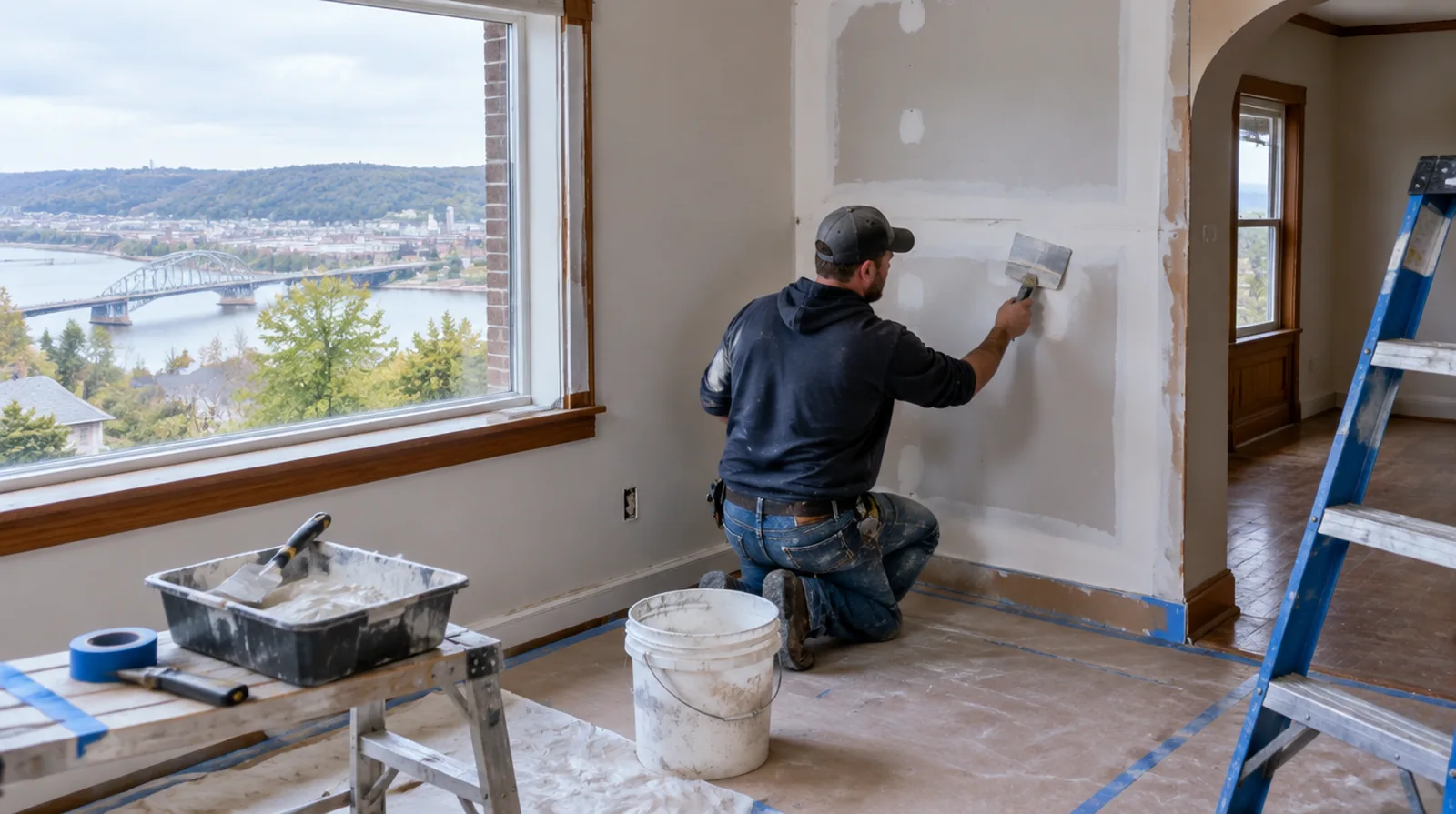
Set the paint boundary
Even a well blended patch can remain visible when touched up with an aged or unavailable paint color. Repainting the full wall from corner to corner may give a more consistent appearance. When a quote includes multiple visits, ask what happens during each stage and when the space needs to remain undisturbed between coats.
Identify the cause
Damage from an impact is not assessed in the same way as a seam that keeps splitting at a door opening. Check whether the wall feels firm and whether the defect has changed since it first appeared. For a limited patch requiring substantial setup, assess the complete package of access and protection rather than relating cost only to the opening size.
Project context in Sioux City
Spring thaw seepage can stain finished basement walls, so water entry should be addressed first. Dakota Dunes and newer east side homes often have smooth walls that show patch edges clearly.
Scope questions before finishing
When the history of a repair is uncertain, note when it became noticeable and whether its appearance has altered across different seasons.
If a room has only limited ventilation, discuss how the finishing materials can dry without disrupting comfort or spreading dust elsewhere.
For a repair that crosses several surfaces, measure the affected planes separately so the estimate can explain where each finishing treatment starts and stops.
For walls beside bright windows, review a dry sample from an oblique angle as well as looking straight at the repaired surface.
For a surface carrying numerous paint layers, discuss whether differences in the retained profile or sheen justify decorating a broader area.
Where light reflects along the wall, inspect the complete plane instead of limiting the review to the edge immediately next to the repaired section.
If the coating stability is unclear, assess which layers are adequately bonded and which should be removed rather than simply hidden beneath new material.
If the decorative coating is already chosen, share its sheen and color early because those choices influence how substrate preparation is judged.
When building management controls access, agree delivery hours and common area protection before committing to a start or finish date.
If scheduling is the main concern, separate hands on labor from drying intervals instead of treating every visit as a full day of active work.
For an older repair with no clear history, describe when the mark first appeared and whether it has changed through more than one season.
For a project with several trades, agree which inspection or handover point must happen before the next person starts work.
Explore the Sioux City drywall overview for related options, or read the project planning information before arranging the next stage.
More planning details for Sioux City
A crack that keeps returning in a Sioux City home usually needs to be taped rather than filled again. Older homes in Rose Hill often have plaster walls that need careful blending with new board. Forced-air heat dries Sioux City homes in winter and can open seams on upper floors.