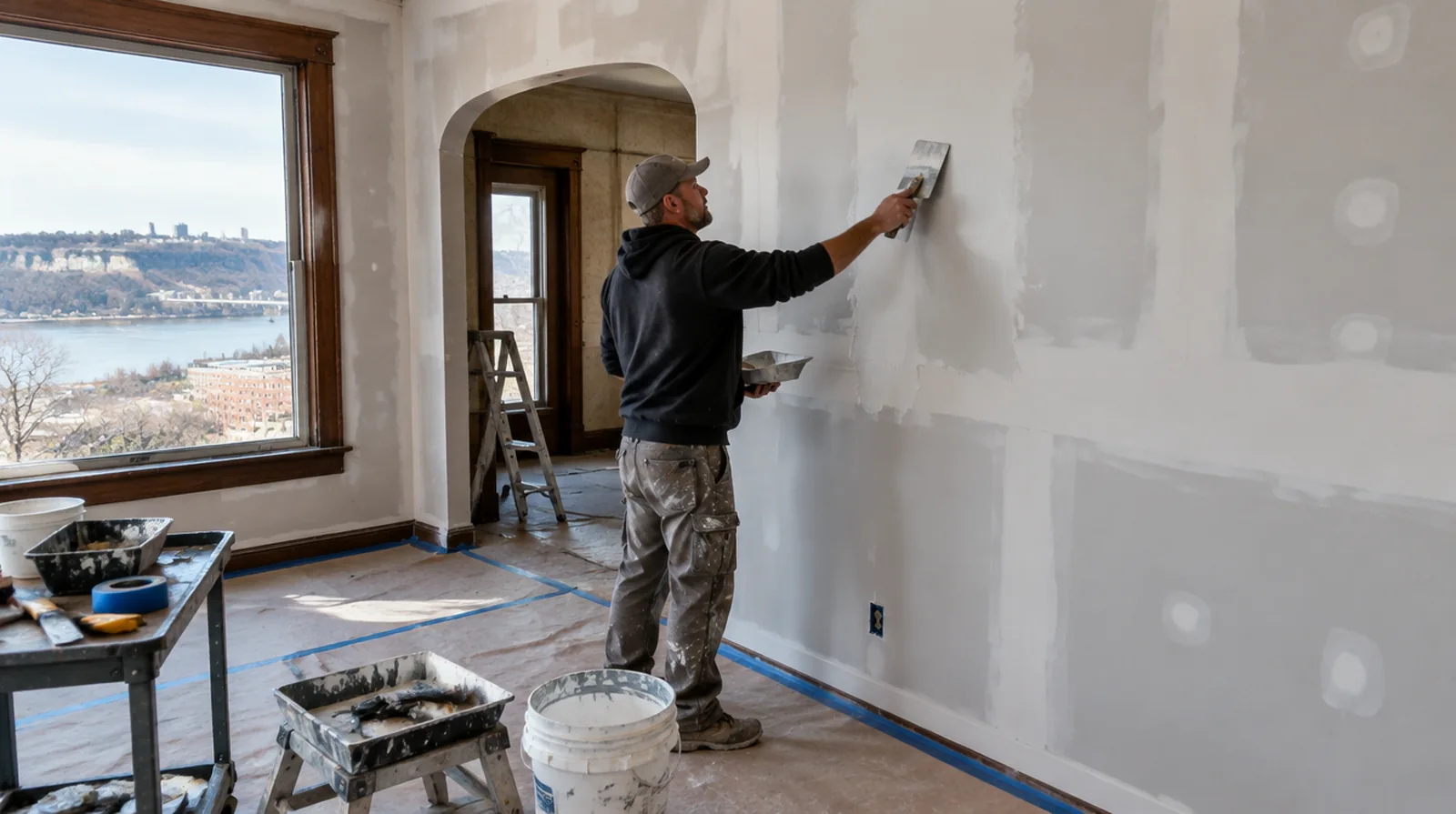
Clean and prepare the wall
Dust, grease and incompatible residues can interfere with adhesion. Select cleaning and any necessary bonding preparation according to the actual surface condition. For a surface that will receive wall covering, share the product requirements early so the finishing stage supports the planned decorative treatment.
Refine with minimal sanding
Good application reduces the amount of sanding needed to achieve a uniform finish. Dust control should still be planned because broad wall work could produce fine airborne particles. At a ceiling or wall containing fittings, assign removal and reinstatement duties for the affected devices before repair access is needed.
Apply controlled thin layers
Build a refined surface with controlled applications instead of a heavy unsupported deposit. More than one pass may be necessary where the existing texture creates deeper low points. For a room that stays in use, set a workable boundary around construction while retaining the access people need for normal daily activities.
Work around trim carefully
Protect the junctions around frames, baseboards and fittings while planning how the new surface will meet them. Decide whether trim removal is needed or whether a neat stop against it is acceptable. Where occupants have dust sensitivity concerns, agree containment and cleaning measures before settling the way the room will be staged.
Inspect using side light
A surface can appear even under direct lighting while revealing shallow tool lines from the side. The review should reflect the conditions that will matter when the interior returns to everyday use. Where several contractors share the renovation, identify the inspection and handover milestones that determine when each following stage can proceed.
Assess the existing coating
A thin new finish depends on the strength of the coating that will remain underneath it. The assessment should distinguish a sound but uneven surface from one that is actively peeling. For a limited patch requiring substantial setup, assess the complete package of access and protection instead of relating cost only to the opening size.
Stabilize torn paper
Wet finishing material can lift damaged paper if the exposed area has not been suitably prepared. Damaged spots need an appropriate sealing approach before the broad finishing coats are applied. When building management controls access, agree delivery hours and common area protection before committing to a start or finish date.
Let each coat dry
Room temperature, humidity and airflow influence time needed for drying across a broad coated surface. Disturbing soft material too early can undermine an otherwise careful smoothing pass. When a quote includes multiple visits, ask what happens during each stage and when the space needs to remain undisturbed between coats.
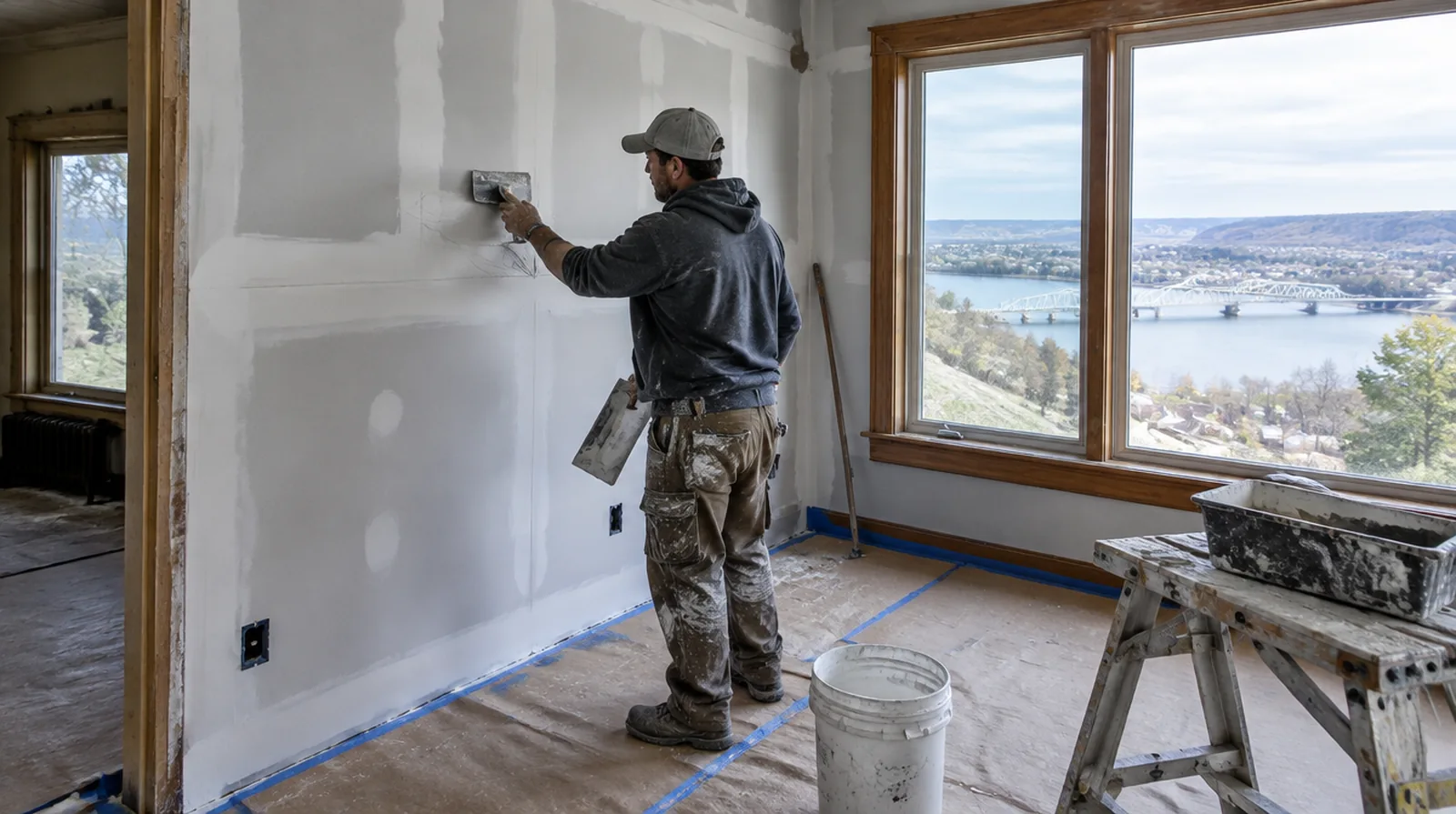
Check underlying movement
Surface refinement cannot stabilize framing movement or repair board that no longer holds securely. Assess recurring cracks and complete necessary reinforcement before covering the area with a skim. At an edge beside built in furniture, state whether the obstruction will be removed or whether finishing stops at the section that can be reached.
Choose paint with the finish
Higher sheen coatings can emphasize small variations that a matte finish makes less obvious. Review the final decorative plan before deciding how extensive the substrate preparation needs to be. If there is a fixed move in date, reserve adequate time for the coating stages after drywall work rather than counting only the installation period.
Project context in Sioux City
Steep streets and long front steps in Sioux City can make carrying board the slowest part of the job. A crack that keeps returning in a Sioux City home usually needs to be taped rather than filled again.
Scope questions before finishing
If materials must cross common building areas, plan the protection and access route so other occupants are not needlessly obstructed by deliveries.
If the room will remain occupied, identify a workable separation between the project space and the space that still needs daily access.
For a wall receiving a decorative covering, provide its preparation requirements early adequate for the drywall finish to support that product.
Before comparing two proposals, check that both include the same protection, finishing and cleanup boundaries instead of comparing totals alone.
Where a future fixture will be installed, coordinate any required backing while the cavity is accessible rather than reopening the completed wall.
When reviewing the finished work, use the agreed lighting and natural room viewpoints so the assessment reflects the intended use of the space.
When the work area includes a doorway, check the clearance for panel movement as well as the amount of space available for finishing tools.
If the project is part of a larger remodel, settle the sequence with flooring, trim and cabinet work before setting a final finishing date.
Where a surface has been painted many times, consider whether differences in texture or sheen will require a wider decorative treatment.
Where occupants have dust sensitivity concerns, agree containment and cleaning measures before settling the way the interior will be staged.
When damage followed other building work, describe the nearby alterations and the sequence between those changes and the first visible defect.
If the surface condition is uncertain, allow for an assessment that can distinguish stable material from layers that ought not to be covered.
Explore the Sioux City drywall overview for related options, or read the project planning information before arranging the next stage.
More planning details for Sioux City
Forced-air heat dries Sioux City homes in winter and can open seams on upper floors. Spring thaw seepage can stain finished basement walls, so water entry should be addressed first. Dakota Dunes and newer east side homes often have smooth walls that show patch edges clearly.