Freeze, thaw and seasonal cracking
Winters in Sioux City are very cold and summers are hot and humid. Houses expand and contract through that range, and cracks above doors, around windows and along ceiling seams often open in January and close again by summer. A crack that comes back in the same place usually needs to be cut out, taped and finished with a method that tolerates movement, rather than filled again with spackle.
Sioux City bluffs and older neighborhoods
Sioux City climbs the bluffs above the Missouri River where Iowa, Nebraska and South Dakota meet. Rose Hill and the area around Grandview Park hold Victorian and early twentieth century homes with plaster walls, while Morningside, Leeds and the Northside mix bungalows, foursquares and postwar ranches. Newer subdivisions on the east side and near Sunnybrook have drywall throughout. A single repair can involve plaster techniques in one house and a simple board patch in the next.
Steep streets and detached garages
Many older Sioux City homes sit on steep hillside streets with long front steps and detached garages off the alley. Board deliveries might need to come through the back yard or up several flights of stairs. Icy steps in winter add risk, so scheduling and staging should allow time to clear the path and protect floors from salt and slush tracked in on boots.
Before a scope is written
Where flooring is staying in place, agree on protective coverings and check that tools and material handling will not damage the noticeable finish.
If the current finish is unusual, keep a small reference sample or a close photograph to support the discussion about blending and restoration.
Cover fastener heads
Fill fastener depressions level with the surrounding face without creating avoidable mounds. A screw that protrudes or has broken the paper should be addressed before it is concealed.
Add reliable backing
Support a ceiling replacement mechanically at its perimeter rather than using finishing compound as a structural attachment. Fit compatible board thickness so the old and new faces meet without an avoidable step.
Review with side lighting
Use an angled view as well as a direct view when reviewing a finished patch. Window light may reveal a contour that ordinary room lighting hides, while coating sheen creates an independent issue.
Lay out the joints
Arrange supported sheet edges and joint positions with the openings and final finish in mind. A sensible panel pattern makes both the fastening stage and the later joint treatment more straightforward.
Avoid rigid bridges
Resilient components can lose effectiveness when fasteners or fittings create unintended solid connections. Check fastener and attachment details against the system guidance rather than judging only the visible wall.
Lay out doors and glazing
Set out openings with the dimensions and support needed by their specified doors and glazing. Coordination with door and glazing installers helps keep the finished lines consistent.
About the illustrations
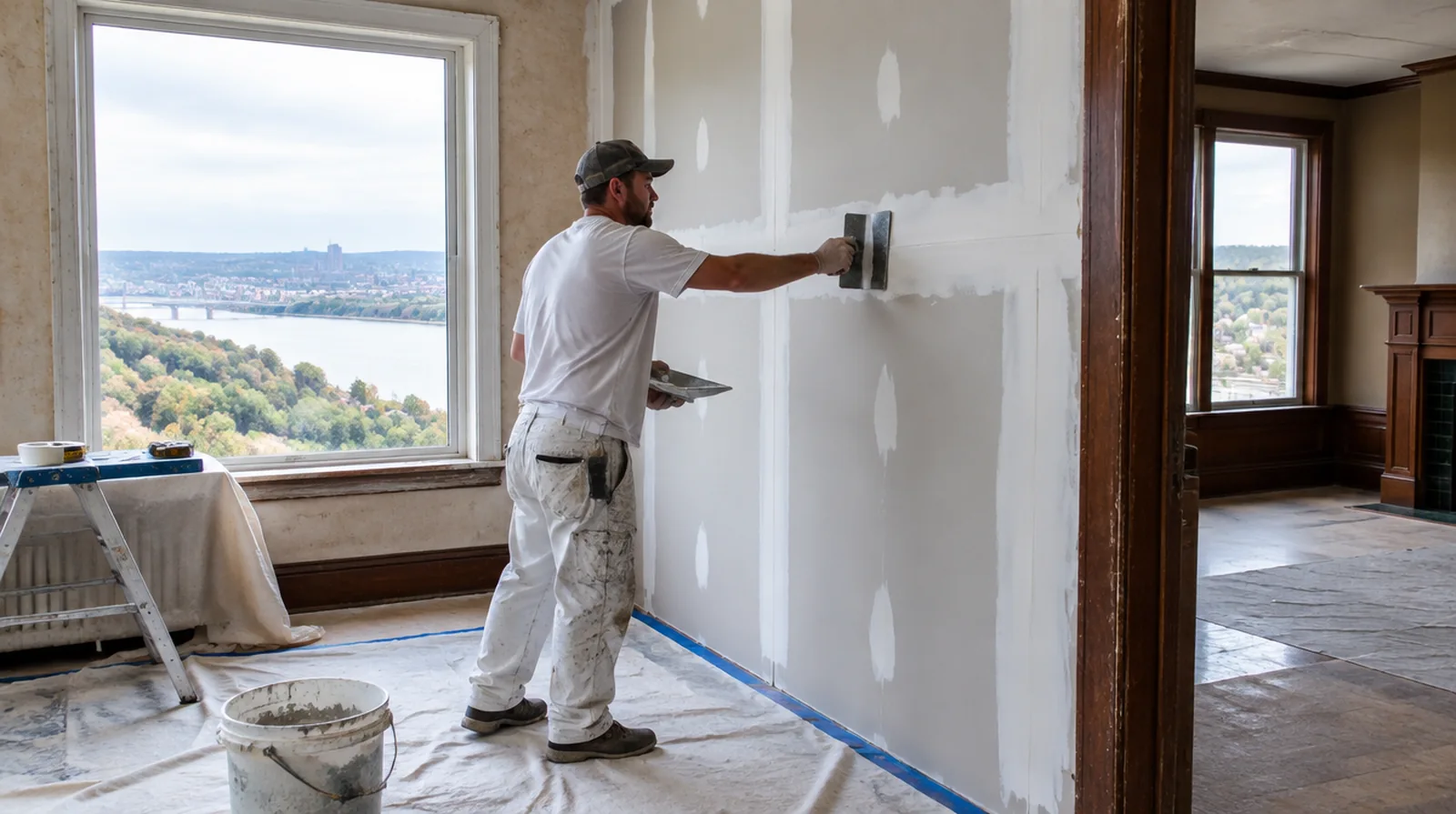
The website images are generated examples of drywall interiors and methods, not photographs of completed customer work. No customer reviews or qualifications are implied. The project form and the telephone shown on this page connect you with the next project conversation.
Explore the drywall services or view the address and map.
More planning details for Sioux City
Painting the full wall after a crack repair helps hide the transition in older homes. Icy winter steps mean material deliveries should be planned for a cleared and safe path. Sioux City's cold winters and hot summers make cracks above doors open and close with the seasons.