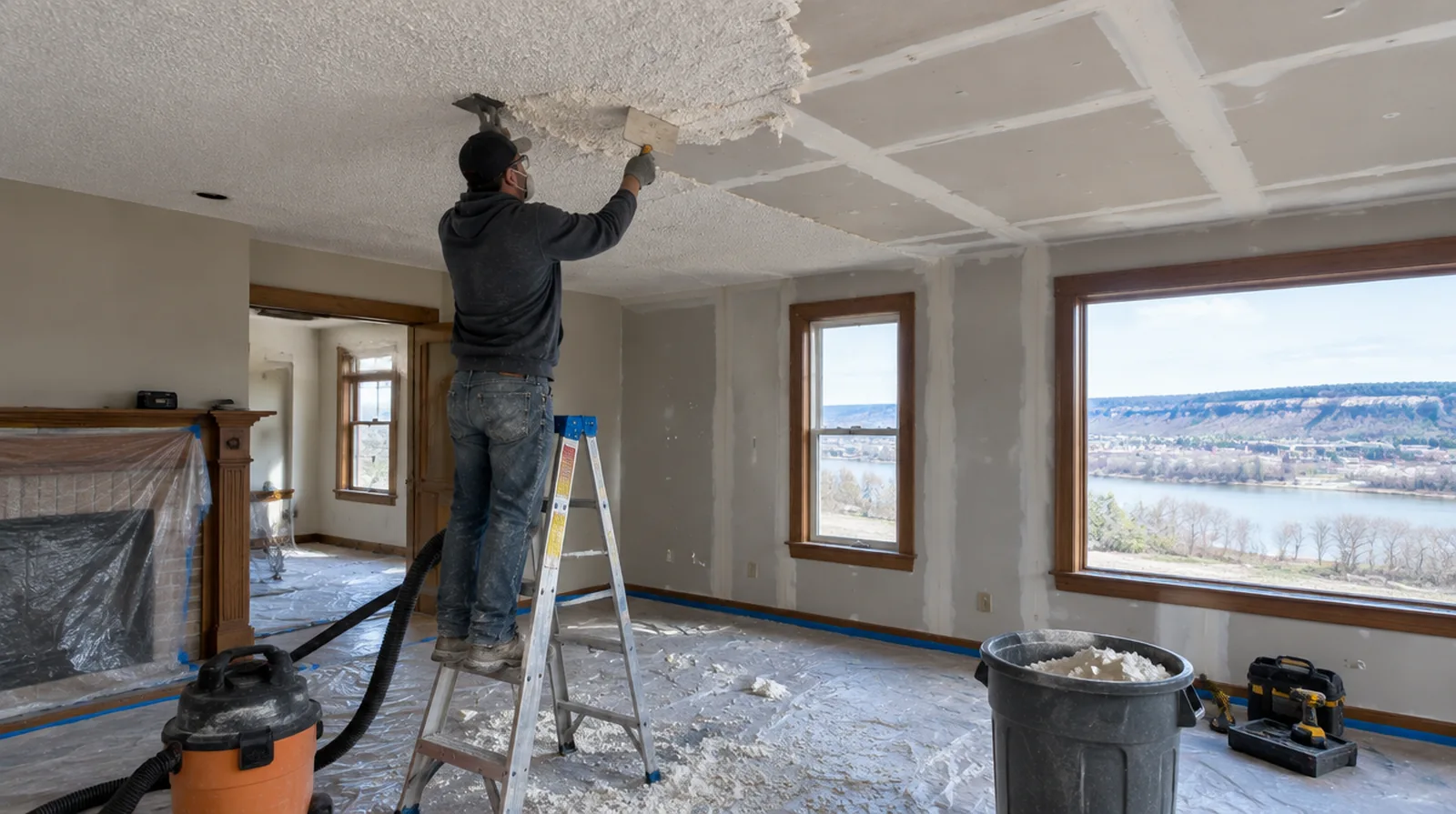
Repair exposed imperfections
Scraping can reveal torn paper, dents and joint defects that need stabilization before a new finish. Talk through an allowance for those repairs before the decorative coating has been taken down. If the problem developed after another renovation, explain which nearby materials or building systems changed before the damage became visible.
Plan fixture coordination
Ceiling fittings may require qualified disconnection or other separate handling before access is available. Specify who will deal with lights, alarms and reinstatement instead of assuming those tasks are included. For a planned new wall mounted fixture, resolve its backing requirements while the cavity remains open instead of cutting into completed drywall later.
Confirm primer and paint
The newly exposed and repaired ceiling needs an suitable coating plan after it dries. Clarify whether the drywall quote stops at a ready for painting finish or includes decorative coatings. If scheduling is the main concern, separate hands on labor from drying intervals instead of treating every visit as a full day of active work.
Protect the entire room
Ceiling removal creates overhead debris that can reach walls, floors and fixtures. Talk through furniture removal, masking and the route used to carry materials out of the property. When building management controls access, agree delivery hours and common area protection before committing to a start or finish date.
Check for painted coatings
Previously painted popcorn texture may resist simple wetting and require a differing removal approach. Assess a controlled test area so the method, labor and potential substrate repairs are understood. When the wall has strong reflected light, look at the full plane rather than judging only the narrow strip immediately beside the patch.
Choose the final surface
The intended replacement finish should be selected before the removal and restoration work is priced. A new patterned finish and a flat smooth ceiling can need substantially different preparation. When reviewing the finished work, use the agreed lighting and natural room viewpoints so the assessment reflects the intended use of the space.
Avoid unnecessary saturation
Avoid a process that introduces so much water that it damages the supporting gypsum. Choose the method with regard to both the coating response and the condition of the board beneath it. If the completion date matters most, allow for intervals between coats as well as active labor rather than assuming the entire process happens continuously.
Establish material safety
Older textured ceiling coatings may contain asbestos and should never be scraped without appropriate evaluation. Where asbestos could be present, arrange suitable testing and follow the applicable process before removal begins. At a repair beside an opening, allow clearance for moving board through the doorway and space to use the finishing tools effectively.
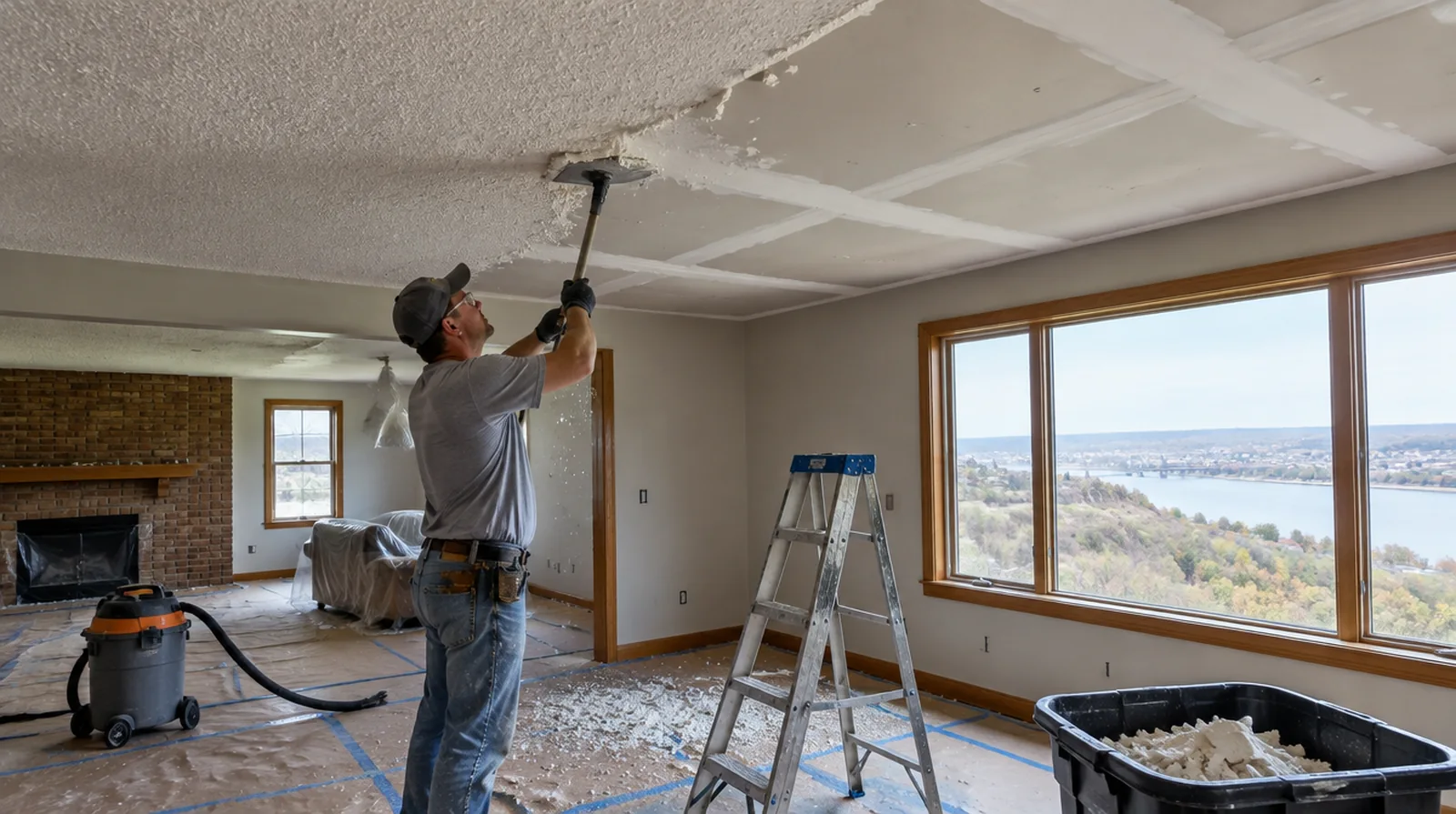
Review ceiling condition
A textured ceiling can hide old repairs and seams that were never prepared for a smooth appearance. Allow for assessment and further finishing after safe removal exposes the original face. If there is a fixed move in date, reserve sufficient time for the coating stages after drywall work instead of counting only the installation period.
Plan cleanup and reopening
The room ought to be reviewed after debris removal and the agreed stages of finishing are complete. Review the agreed surface condition and cleanup before returning the interior to normal use. Where a finished perimeter is prominent, decide whether trim stays in position or is removed before agreeing how the new surface meets that edge.
Project context in Sioux City
A crack that keeps returning in a Sioux City home usually needs to be taped rather than filled again. Older homes in Rose Hill often have plaster walls that need careful blending with new board.
Scope questions before finishing
When building management controls access, agree delivery hours and common area protection before committing to a start or finish date.
For walls beside bright windows, review a dry sample from an oblique angle as well as looking straight at the repaired surface.
For a room that stays in use, set a workable boundary around construction while retaining the access people need for normal daily activities.
When a quote includes multiple visits, ask what happens during each stage and when the room needs to remain undisturbed between coats.
If the proposal requires return visits, identify the purpose of each stage and the intervals during which finishing material needs to remain undisturbed.
If materials must cross common building areas, plan the protection and access route so other occupants are not needlessly obstructed by deliveries.
If the completion date matters most, allow for intervals between coats as well as active labor instead of assuming the entire process happens continuously.
Where the quoted work stops before painting, request a clear description of what remains so the next decorating stage can be priced realistically.
In a room with little free floor space, identify temporary storage for belongings and establish enough clearance for the work before delivery.
Where a finished perimeter is prominent, decide whether trim stays in position or is removed before agreeing how the new surface meets that edge.
When a wall has repeated defects, keep a record of earlier repair attempts so a new assessment does not simply repeat an unsuccessful approach.
Where light reflects along the wall, inspect the complete plane instead of limiting the review to the edge immediately next to the repaired section.
Explore the Sioux City drywall overview for related options, or read the project planning information before arranging the next stage.
More planning details for Sioux City
Icy winter steps mean material deliveries should be planned for a cleared and safe path. Spring thaw seepage can stain finished basement walls, so water entry should be addressed first. Ice dams from past winters are a common cause of ceiling stains near exterior walls.